The Arabian Horse: History, Traits, and Why They Are Special
Table of Contents
The Whispers of the Desert
You might think you understand the equine world, capable of discerning beauty, strength, and spirit in a horse. But what if there was a breed whose very existence challenges that perception, a living legend that doesn’t just trot through history but gallops with it?
The truth is, until you’ve encountered the Arabian horse, you’ve only scratched the surface of equine magnificence. This isn’t merely a horse; it’s a profound narrative etched in sand and spirit, a creature whose Arabian horse history is as ancient as recorded civilization, whose Arabian horse traits are a masterclass in genetic perfection, and whose unique qualities explain precisely why Arabian horses are special.
Prepare to embark on a journey that will not only unveil the unparalleled mystique of this desert jewel but also fundamentally reshape your understanding of what a horse can truly be.
The Ancient Roots of the Arabian Horse: A Journey Through History
To truly appreciate the Arabian horse, one must first delve into their profound and intricate Arabian horse history, tracing their origins back millennia to understand their pivotal role in shaping civilizations and inspiring countless legends.
Origins in the Arabian Peninsula: Bred by Bedouin
The crucible for the Arabian horse was the unforgiving vastness of the Arabian Peninsula. Here, amidst scorching deserts, scarce water, and relentless winds, a breed was forged out of necessity and profound human connection. The Bedouin tribes, nomadic people who traversed these harsh lands, were the original custodians and breeders of these horses. For them, a horse was not merely livestock; it was a revered member of the family, often sharing their tents, protected from the elements, and even sharing meager rations. This intimate coexistence fostered an unparalleled bond of loyalty, trust, and intelligence.
The Bedouin practiced an intense, natural selection process. Only the strongest, most enduring, and most courageous horses survived and reproduced. They were bred for speed over short distances for raids (ghazus), for incredible stamina over vast stretches of desert, and for keen intelligence that allowed them to navigate treacherous terrain and respond intuitively to their riders. Oral pedigrees, meticulously memorized and passed down through generations, tracked lineage with a precision that predated written records, ensuring the purity of their revered “Kehilan” or purebred lines. This selective breeding, focused on function and survival above all else, laid the foundation for a breed unlike any other.
The Arabian Horse’s Role in Human History: From Warhorse to Royal Mount
The unique attributes of the Arabian horse did not remain confined to the desert. Their unparalleled speed, stamina, and intelligence quickly elevated them to a strategic position in the annals of human history, from the battlefields to the palaces of royalty. As warhorses, their ability to cover vast distances at speed, maintain agility in skirmishes, and navigate chaotic environments with an almost uncanny intelligence made them invaluable. Figures like Saladin, the legendary Sultan of Egypt and Syria, famously relied on Arabian horses for their swift campaigns and decisive maneuvers against the Crusaders.
Beyond warfare, Arabians facilitated trade routes, carrying precious goods across continents and deserts, their endurance making long journeys viable. They accompanied explorers, opening up new territories and connecting disparate cultures. As diplomatic gifts, they became symbols of wealth, power, and prestige, exchanged between kings and emperors, cementing alliances and demonstrating influence. From the cavalry charges that decided the fate of empires to the stately processions of royal courts, the Arabian horse was not just an observer but an active participant in the grand tapestry of human endeavor, forever intertwining their fate with our own.
Global Spread and Enduring Legacy: Influencing the World
The global reach of the Arabian horse is a testament to its extraordinary qualities. Their initial spread was propelled by conquest and trade. European crusaders, returning from the Middle East, brought these magnificent horses back to their homelands, captivated by their beauty and spirit.
Later, the Ottoman Empire further dispersed Arabian bloodlines across vast territories. However, it was the intentional importations into Europe that truly cemented their enduring legacy. The “Three Grand Sires” – the Darley Arabian, the Godolphin Arabian, and the Byerley Turk – arrived in England in the late 17th and early 18th centuries.
These horses became the foundational sires of the English Thoroughbred, a breed that would, in turn, revolutionize horse racing and equestrian sports worldwide. But the Arabian influence didn’t stop there. Their blood runs deep in the pedigrees of countless modern breeds, enriching them with refinement, stamina, speed, and hardiness.
The Orlov Trotter, the Morgan horse, the American Saddlebred, the Welsh Pony, and even the majestic Lipizzaner all owe a significant debt to the Arabian. Today, Arabian horses are found on every continent, championed by breed organizations and admired in show rings, endurance races, and recreational riding.
Their enduring legacy is not just in their physical presence but in the genetic imprint they’ve left on the entire equine world, a living testament to the power of their ancient bloodlines. How did such a powerful history translate into the very being of these magnificent animals, shaping their physical form and spirit?
Defining the Arabian Horse: Unmistakable Traits and Temperament
A meticulous examination of the distinct Arabian horse traits reveals a creature of unparalleled beauty, resilience, and intelligence, making them instantly recognizable and beloved worldwide.
Physical Hallmarks: Beauty and Function Combined
The Arabian horse possesses a distinctive silhouette and a collection of physical attributes that are not merely aesthetic but are direct results of their desert lineage, perfectly blending beauty with function.
* The Iconic Dished Face, Large Eyes, and Small Muzzle: The Arabian’s head is arguably its most defining feature. The dished face, a concave profile from the forehead to the muzzle, is instantly recognizable and lends an air of ethereal beauty. This is complemented by large, dark, and expressive eyes set wide apart, giving them a gentle, intelligent, and sometimes almost human-like gaze. Their small muzzle is finely chiseled, leading to large, flaring nostrils that are crucial for efficient oxygen intake during strenuous activity, a vital adaptation for endurance in hot, dry climates. A broad forehead signifies ample brain capacity, underscoring their renowned intelligence.
* High Tail Carriage and Arching Neck: When an Arabian horse moves, especially when excited or at liberty, its high tail carriage is unmistakable. The tail is often carried aloft, almost parallel to the ground, contributing to an impression of elegance and buoyancy in their movement. This is often paired with an arching neck, known as the “mitbah,” which is long, graceful, and set high into the shoulder. This distinctive neck conformation not only enhances their aesthetic appeal but also contributes to their natural balance, agility, and the characteristic “floating” action of their trot.
* Strong Bones, Compact Body, and Exceptional Hooves: Beneath the refined exterior lies a robust and hardy constitution. Arabian horses typically have a compact body with a relatively short back
They often possess one less lumbar vertebra (five instead of six) and one less pair of ribs (17 instead of 18) than other breeds. This compact build contributes to their remarkable strength-to-size ratio and their legendary endurance.
Their bones are exceptionally dense and strong, developed to withstand the rigors of desert terrain, contributing to their soundness and longevity.
Crucially, their exceptional hooves are hard, round, and well-formed, capable of enduring rocky and sandy environments. This often allows them to work barefoot where other breeds would require shoes. These combined physical traits create an equine athlete that is as resilient as it is beautiful.
Temperamental Gifts: Spirit, Intelligence, and Loyalty
Beyond their captivating physical form, the Arabian horse is cherished for a complex and highly desirable set of temperamental gifts that set them apart. These are the qualities that form the bedrock of why Arabian horses are special.
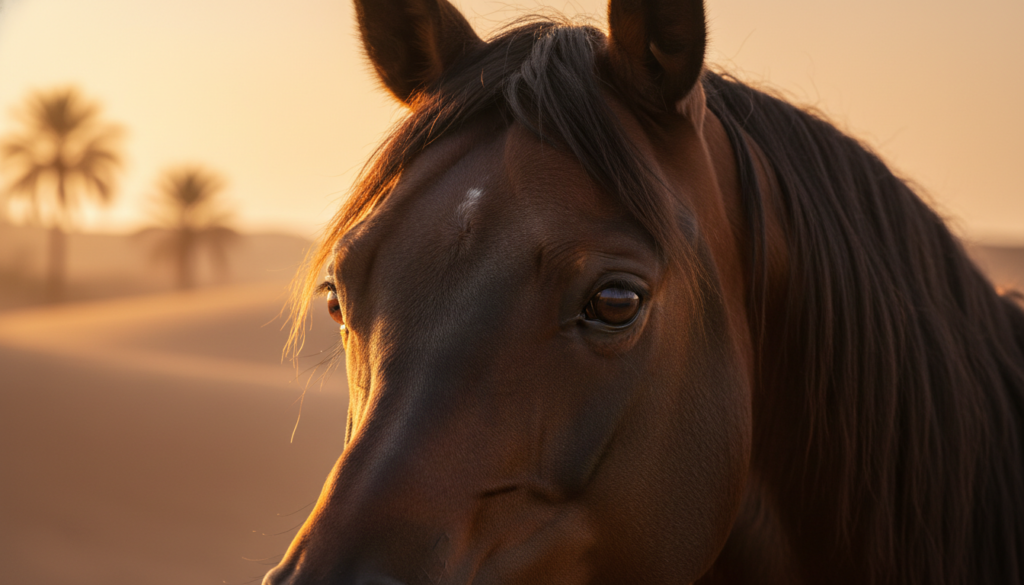
* Spirit (Fire): Often misinterpreted as “hot-headedness,” the Arabian “spirit” is better understood as an inherent vitality, alertness, and eagerness. They are horses of immense energy and responsiveness, quick to react to their surroundings and their rider’s aids. This fire is not an untamed wildness, but rather a profound sensitivity and enthusiasm for life and work. They possess an innate drive to move and perform, making them exhilarating partners when their energy is channeled correctly.
* Intelligence: Arabians are renowned for their keen intelligence. They are quick learners, capable of understanding complex commands and solving problems. This intelligence, however, means they thrive on mental stimulation and can become bored or mischievous if not challenged and engaged. They often seem to anticipate their rider’s intentions, making them intuitive partners, but also requiring consistent, fair, and intelligent handling from their humans.
* Loyalty and Affection: Perhaps one of the most heartwarming Arabian horse traits is their profound capacity for loyalty and affection. Tracing back to their Bedouin upbringing where they lived alongside their human families, Arabians form deep, unwavering bonds with their handlers and owners. They are often described as “people horses,” eager to please, and seeking out human companionship. This makes them wonderfully sensitive and devoted partners, often displaying an almost dog-like attachment.
* Sensitivity: Coupled with their intelligence and loyalty is a heightened sensitivity. Arabians are incredibly attuned to human emotions and intentions. They respond best to gentle, consistent handling, clear communication, and a calm demeanor. Harshness or inconsistency can easily lead to confusion or apprehension in such a sensitive animal. Their intelligence means they quickly learn to trust or distrust, and once that trust is earned, it is a powerful bond.
* Endurance and Stamina: The legend of Arabian endurance is no exaggeration. Developed for long, grueling journeys across vast deserts, their physiology is exquisitely adapted for stamina. Their deep chests house large lungs and hearts, enabling efficient oxygen uptake and delivery. They possess incredible recovery rates and the ability to maintain performance over extended periods, making them the undisputed champions of endurance riding.
* Hardiness: Bred in one of the most demanding environments on earth, Arabians are incredibly hardy animals. They are efficient feed converters, capable of thriving on sparse rations, and possess a remarkable ability to adapt to a wide range of climates, from blistering heat to severe cold, without compromising their health or performance.
These interwoven traits create a horse that is not just beautiful to behold, but a truly remarkable equine partner. But how do these specific traits coalesce to make them truly stand apart from all other breeds, cementing their status as something far beyond the ordinary?
Why Arabian Horses Are Special: A Legacy Beyond the Ordinary
The accumulation of their ancient history and distinctive traits culminates in a singular answer to the question: why Arabian horses are special. They represent a pinnacle of equine development, a living testament to natural selection and intentional breeding.
The Ultimate Endurance Athlete
In the realm of equine athleticism, the Arabian stands as the undisputed champion of endurance. Their physical adaptations, from their large nostrils and deep chests allowing superior oxygen intake to their dense bones and efficient metabolism, make them uniquely suited for sustained exertion. This isn’t just a historical anecdote; it’s a present-day reality. Arabian horses dominate the sport of endurance riding globally, consistently winning events like the Tevis Cup, often covering 100 miles in a single day across challenging terrain. Their ability to maintain speed and soundness over vast distances, coupled with quick recovery rates, showcases a physiological marvel honed over millennia.
The Unrivaled Beauty and Refinement
No discussion of why Arabian horses are special is complete without acknowledging their aesthetic appeal. Their unique physical hallmarks – the dished face, large eyes, small muzzle, high tail carriage, and arching neck – combine to create a horse of unparalleled beauty and refinement. They embody an almost poetic elegance, a grace in motion that seems to defy gravity, often described as “floating” across the ground. This visual splendor has made them muses for artists, poets, and storytellers for centuries, solidifying their image as the epitome of equine perfection in art and literature.
An Unbreakable Bond: Companionship and Trust
The Arabian horse offers something truly unique to its human partners: an extraordinary depth of bond built on loyalty and trust. Their history of living intimately with the Bedouin instilled in them a desire for human connection that persists to this day. They are sensitive, intelligent, and fiercely loyal, often forming an almost telepathic understanding with their riders. This makes them not just exceptional athletes or show horses, but also deeply cherished companions, capable of forming lifelong relationships. Their gentle nature, despite their “spirit,” makes them suitable as family horses and even in therapeutic riding programs, where their intuitive responses and affectionate demeanor can work wonders.
The Living Foundation of Modern Breeds
Perhaps the most significant reason why Arabian horses are special lies in their unparalleled genetic contribution to the global equine population. As the oldest purebred horse breed, the Arabian is the living foundation upon which countless modern breeds have been built. Without the Arabian, the Thoroughbred as we know it would not exist, and subsequently, many sport horse breeds that derive from the Thoroughbred would also be different. Their ancient, unadulterated bloodlines introduced qualities of refinement, speed, stamina, and bone structure that were desperately needed to improve and create other breeds. They are, in essence, the genetic wellspring for much of the equine world, a living historical artifact that continues to shape the future of horses.
Cultural Icon and Symbol of Heritage
Beyond their physical and genetic attributes, the Arabian horse holds a profound place as a cultural icon and a symbol of heritage, particularly in the Middle East. They represent freedom, nobility, courage, and beauty. Their image is woven into the fabric of countless myths, legends, and historical narratives. Owning an Arabian is not just owning a horse; it is connecting with millennia of history, becoming a custodian of a living legend. Their presence evokes a sense of timeless majesty and speaks to a deep, enduring bond between humans and horses.
The Enduring Allure of the Desert Jewel
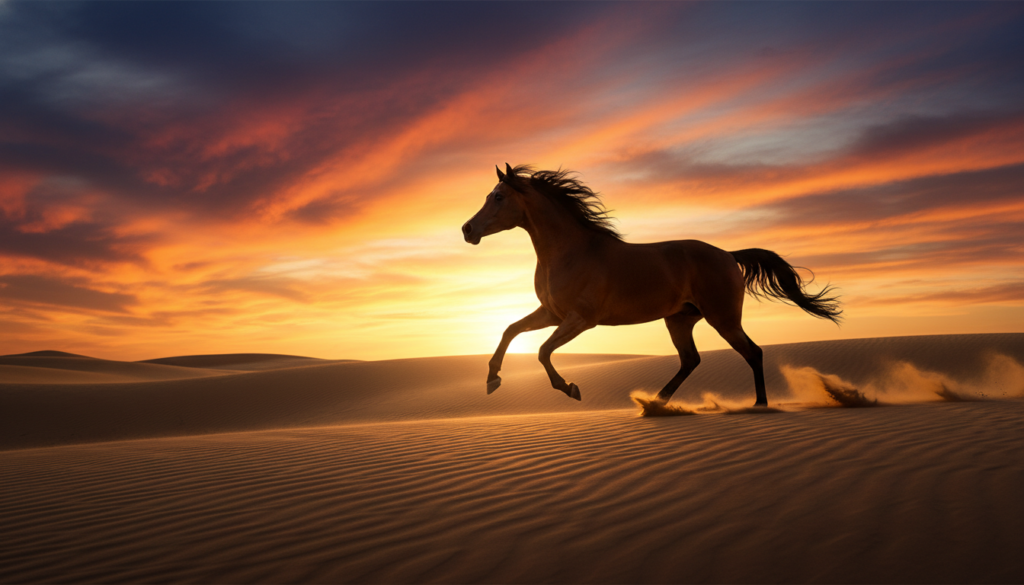
From the scorching sands of the Arabian Peninsula to the global stages of modern equestrianism, the Arabian horse stands as a testament to evolution, selective breeding, and the enduring bond between humans and animals. We’ve journeyed through their rich Arabian horse history, witnessed how their Arabian horse traits from the iconic dished face to their boundless spirit were meticulously forged for survival and performance. Ultimately, it becomes unequivocally clear why Arabian horses are special: they are a unique confluence of athletic prowess, stunning beauty, profound intelligence, and unwavering loyalty.
This desert jewel is more than just a breed; it is a living legacy, a foundational sire to countless others, and a constant reminder of what truly exceptional equine partnership entails. Whether you are a horse enthusiast, a potential owner, or a history buff, the allure of the Arabian horse is undeniable. To encounter an Arabian is to connect with an ancient spirit, to appreciate a masterpiece of natural and human design, and to understand that some legends, truly, are alive and well.
📚 References
- Learn more about breed standards at the World Arabian Horse Organization (WAHO).
- Detailed history of the breed via Encyclopaedia Britannica.
- Information on Straight Egyptian lineages at The Pyramid Society.